
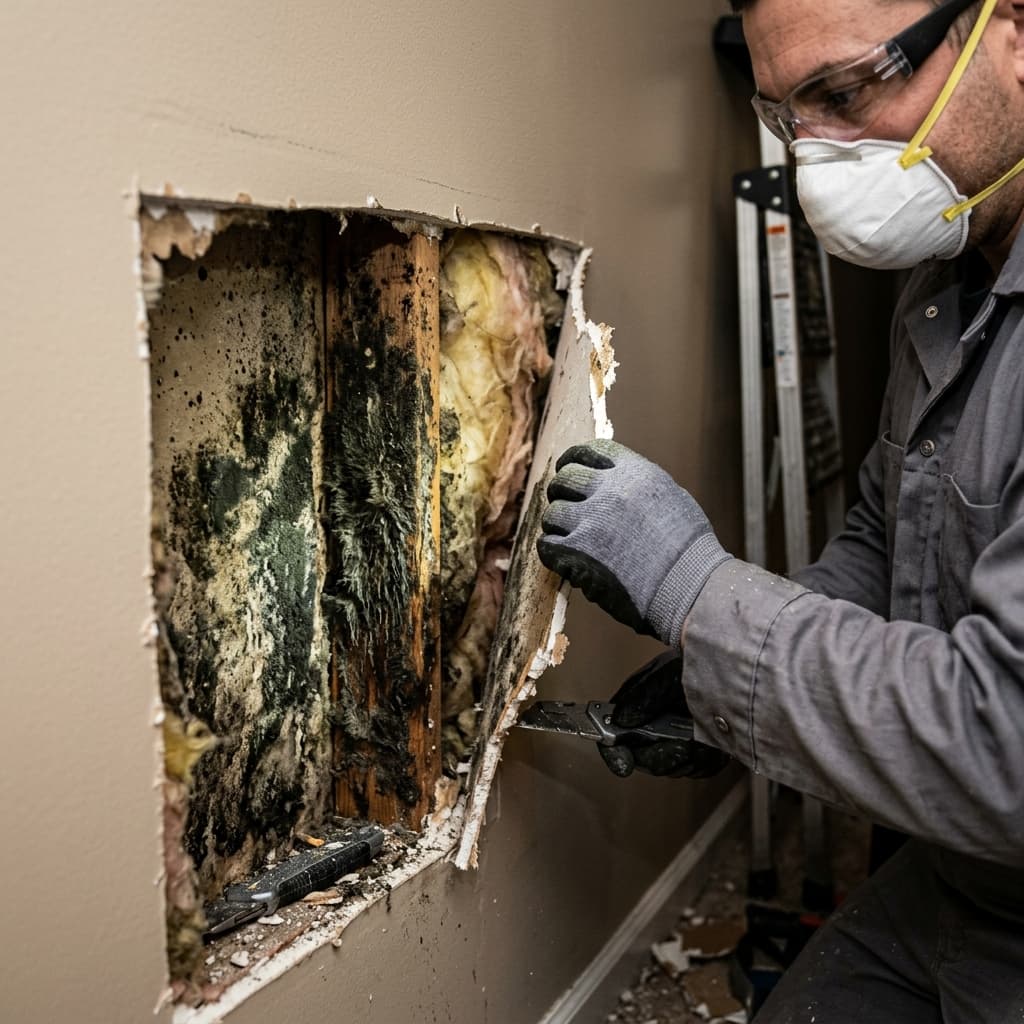
What people mean by black mold
The phrase 'black mold' usually refers to Stachybotrys chartarum — a greenish-black mold that grows on chronically wet cellulose materials like drywall paper, ceiling tiles, and wood subfloor. But many molds appear black or dark green (Aspergillus niger, Cladosporium, Alternaria) and look identical without lab testing. The health concern is real for any mold growing indoors after water damage, but the color alone is not a reliable indicator of which species you have. The decision tree for cleanup is the same regardless of color: how big is the affected area, what materials are involved, and where did the moisture come from.
When DIY removal is reasonable
EPA guidance allows homeowners to handle visible mold smaller than 10 square feet (roughly a 3-foot by 3-foot patch) on non-porous surfaces — tile, grout, glass, sealed countertops, metal — using soap and water, then a household disinfectant. Wear an N95 respirator, gloves, and goggles. Ventilate the area to outdoors if possible. Identify and fix the moisture source first, because mold returns within weeks if humidity or leaks continue. This DIY approach works for bathroom grout, window sills with condensation, and similar small contained patches.
When you need a professional remediation team
Call a remediation team when any of these apply: visible mold larger than 10 square feet, mold inside walls or behind drywall, mold following water damage to porous materials, mold near or in HVAC systems, mold returning after a previous cleanup, mold accompanied by occupant health concerns, or mold in a property you plan to sell. Porous materials often need removal rather than surface cleaning. HVAC-related mold concerns require careful inspection, containment planning, and HEPA filtration during removal.
Why bleach is not the right answer
EPA guidance does not recommend bleach as the primary approach for mold remediation on porous surfaces. Bleach may affect surface growth but does not solve the moisture source or remove contaminated porous materials. Professional remediation focuses on source correction, physical removal of affected materials when needed, HEPA-filtered air scrubbing, antimicrobial treatment where appropriate, and clearance documentation.
What to expect from a professional remediation
A standards-based remediation plan may include pre-remediation inspection and moisture mapping, containment of the affected area, negative-air HEPA filtration during work, removal and disposal of contaminated porous materials, HEPA vacuuming and antimicrobial treatment of cleared surfaces, repair of the moisture source, and either visual clearance or third-party air sampling where appropriate. A moderate single-room job may take several days. If a contractor proposes only spraying or fogging mold without source repair and containment, ask detailed questions before proceeding.
Related Guides
Need help with property damage?
Prime Solutions LLC reviews active water, fire, mold, and cleanup requests across Northern Virginia, DC, and Maryland.
+1 (571) 655-7207