
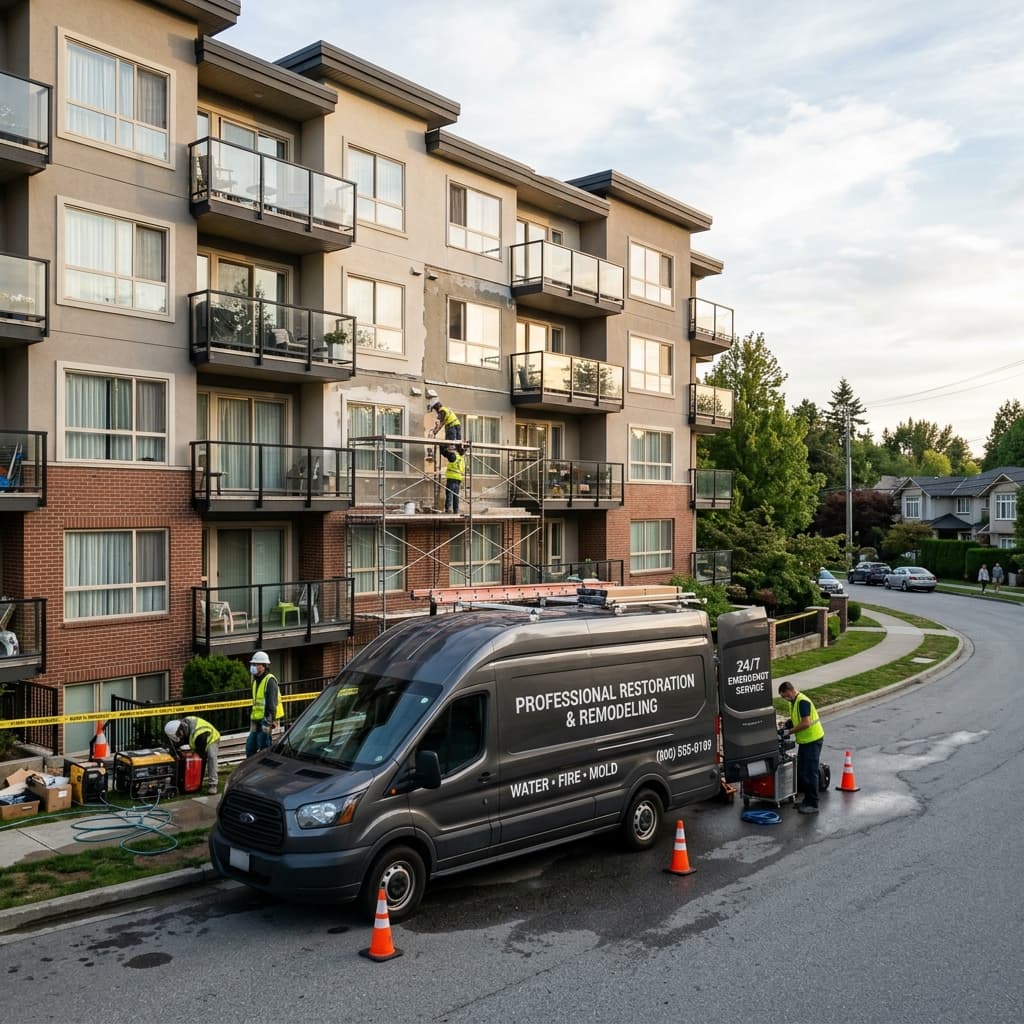
What carriers often review
Many homeowners policies review sudden and accidental water losses inside the home — burst pipes, appliance supply-line failures, water heater leaks, accidental overflows, and weather-related events like a tree falling on the roof. Building materials, contents, limits, deductibles, and endorsements are all evaluated under your policy. Some policies also address sewer or drain backup only if that endorsement has been added.
What carriers often review differently
Gradual or long-term leaks — a slow drip behind a wall over months — are often evaluated differently from sudden events. Surface flooding from rivers, heavy rain runoff, or storm surge is generally reviewed under separate flood coverage rather than a standard homeowners policy. Mold language varies by policy, cause, and sub-limit, so confirm details with your carrier.
How to document a claim
Photograph everything before cleanup if it is safe to do so: wet rooms, water lines on walls, affected contents, and the source of the water. Keep receipts for mitigation work. Notify your insurance company promptly to open a claim, and contact a restoration company to discuss extraction and drying so conditions can be documented while the claim process begins. A restoration team should provide moisture readings, scope notes, photos, and a timeline that your adjuster can review against the policy.
Related Guides
Need help with property damage?
Prime Solutions LLC reviews active water, fire, mold, and cleanup requests across Northern Virginia, DC, and Maryland.
+1 (571) 655-7207