
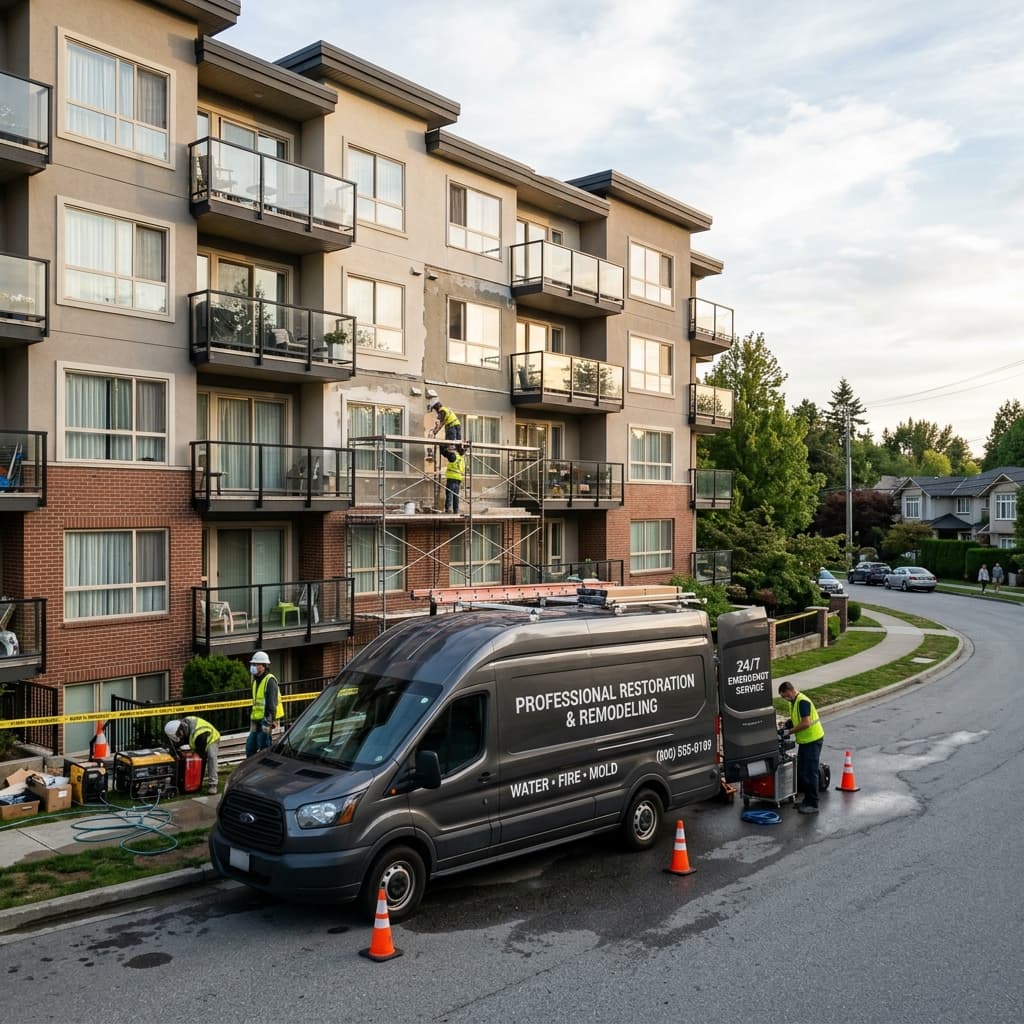
Mitigation protects the structure from more damage
Water mitigation is the stabilization phase: source control, extraction, moisture mapping, selective removal of materials that cannot be restored, dehumidification, air movement, antimicrobial treatment where appropriate, and moisture monitoring. The goal is to limit secondary damage and document what was affected before repairs begin.
Reconstruction restores the property after mitigation
Reconstruction begins when the structure is dry enough to rebuild. It can include drywall replacement, insulation, flooring, trim, paint, cabinetry, kitchen rebuilds, bathroom repairs, and finish carpentry. A good reconstruction scope should match the mitigation documentation so the homeowner, adjuster, and contractor are working from the same loss history.
Why separating the scopes matters for insurance
Insurance carriers often evaluate mitigation and reconstruction separately. Mixing the two too early can create confusion, missed line items, and claim delays. Clean photos, moisture readings, demolition notes, and repair estimates help the adjuster understand why specific materials were removed and what must be rebuilt to return the property to pre-loss condition.
Related Guides
Need help with property damage?
Prime Solutions LLC reviews active water, fire, mold, and cleanup requests across Northern Virginia, DC, and Maryland.
+1 (571) 655-7207