
How to Prevent Mold Growth After a Water Leak: The 48-Hour Plan
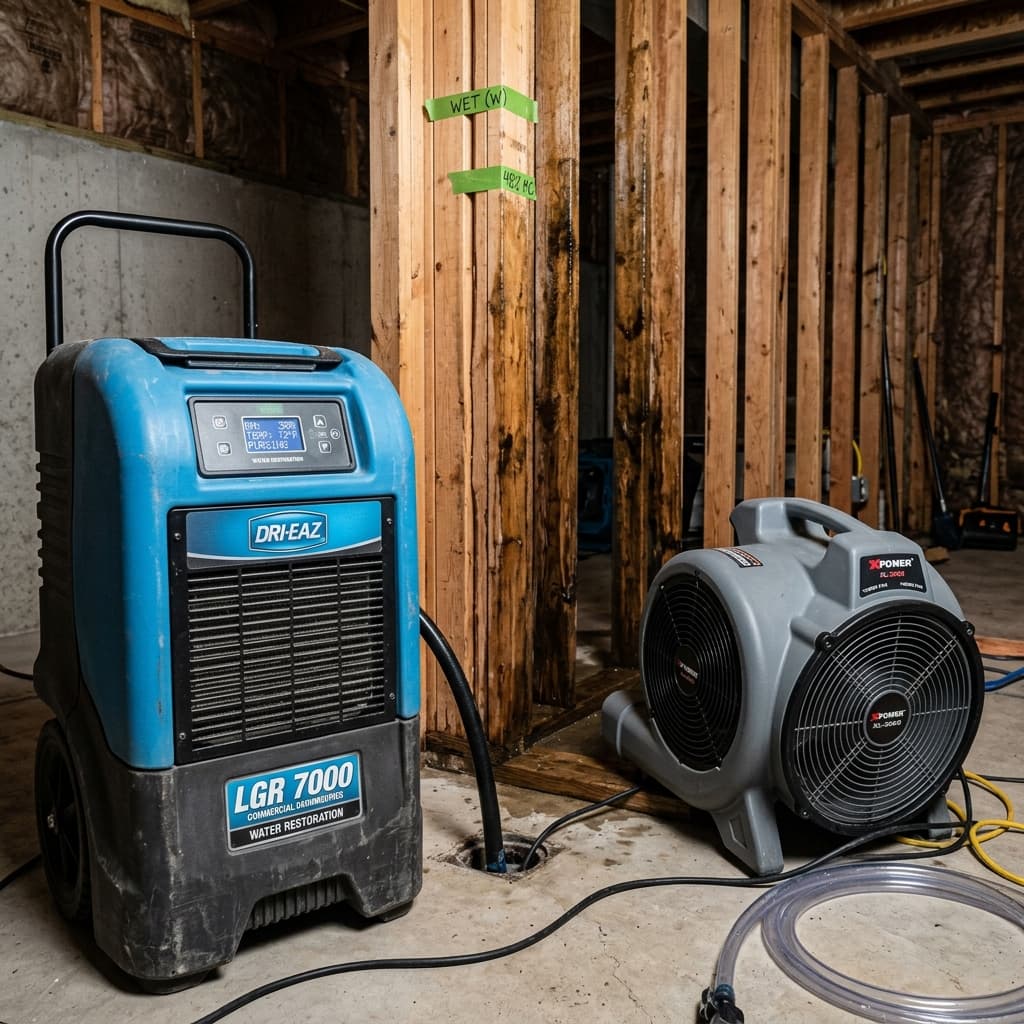
A water leak is more than an immediate mess; it starts a countdown. According to the EPA, mold spores can begin to germinate and colonize wet building materials—such as drywall, carpet padding, and wood framing—within 24 to 48 hours of exposure. Once mold takes hold, cleanup costs rise dramatically, and potential respiratory health risks increase. Following a structured, fast-acting protocol is the single best way to protect your home and health.
The Science of Mold Colonization
Mold spores exist naturally in the air everywhere, but they remain dormant until they find three essential factors: oxygen, an organic food source (drywall paper, structural wood, carpet fibers), and moisture. Because we cannot eliminate oxygen or food sources from our homes, controlling moisture is our only defense. If you can reduce the relative humidity in the room below 50% and return wet building materials to their baseline dry standard within 48 hours, the spores cannot germinate, and mold will not grow.
The Step-by-Step 48-Hour Mold Prevention Protocol
- Stop the Water Source Immediately: Locating the leak is your first priority. If the leak is from a specific sink or toilet, turn the individual chrome isolation valve clockwise. If it is a burst copper pipe or water heater leak, shut off the main incoming water shut-off valve to the entire house.
- Extract Bulk Standing Water: Remove as much standing water as possible within the first few hours. On tile or concrete, use a heavy-duty wet-dry vacuum or squeegees. On carpets, use a high-powered carpet extractor. The more water you extract physically, the less moisture has to be evaporated into the air.
- Remove and Discard Saturated Porous Materials: Highly porous items that have absorbed dirty water (Category 2 or 3 gray/black water) or cannot be dried in 24 hours should be removed immediately. This includes wet cardboard boxes, paper documents, saturated carpet padding, and low-density ceiling tiles. Solid wood and drywall can sometimes be saved if dried quickly, but carpet padding must almost always be replaced.
- Create High-Velocity Airflow: Evaporation is key. Set up heavy-duty circular floor fans or commercial air movers to blow air directly across wet floors and along wet walls. This high-velocity airflow pulls moisture out of the materials and into the ambient air. Ensure the air movers are positioned to create a continuous circular airflow pattern in the room.
- Deploy Active Dehumidification: Air movers release moisture into the room's air. If you do not remove that moisture, the humidity will reach 100%, and water will condense back onto walls and ceilings, fueling mold growth. Run a high-capacity commercial or residential dehumidifier at its highest setting. Keep windows and doors to the outside closed so the dehumidifier only works on the target room's air, keeping the indoor relative humidity strictly below 50%.
- Verify with a Moisture Meter: Never assume a material is dry just because it feels dry on the surface. Moisture migrates deep. Use a pin or pinless moisture meter to check drywall, subfloors, and framing. Compare the readings to a known dry standard in an unaffected room. Only when the moisture content drops to safe levels (usually under 12-15% for wood and under 0.5% for drywall) can you declare the area safe.
When DIY is Not Safe: Know the Limits
While homeowners can handle minor water spills and clean leaks affecting small areas (<10 square feet), professional restoration should be called immediately if:
- The water was contaminated (Category 3 sewage backup or groundwater flooding).
- Water has migrated behind finished drywall ceilings, into uninsulated wall cavities, or under hardwood floorboards where standard fans cannot reach.
- The materials have stayed wet for more than 48 hours, in which case mold may have already started to colonize the interior cavities, requiring professional containment and HEPA filtration.