
How to Inspect Your Deck for Structural Rot & Water Damage
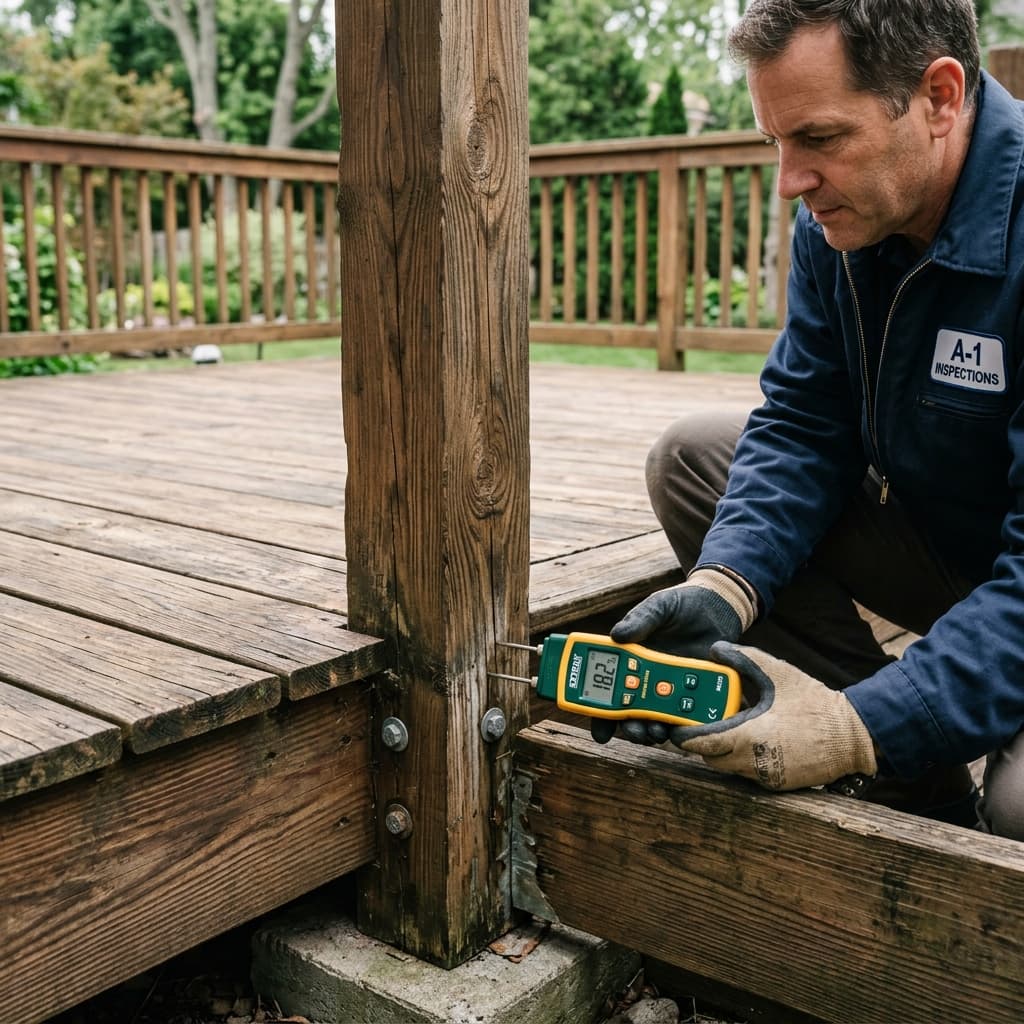
An outdoor deck is a wonderful space for relaxation and entertainment, but because it is fully exposed to the elements, regular safety inspections are vital. According to safety experts, hundreds of deck failures occur annually, with many resulting in serious injuries. The vast majority of these deck collapses are caused by undetected wood rot and water damage at critical structural connection points. As a homeowner, performing a thorough annual inspection can help you catch these issues early and protect your family and guests.
Why Decks Rot: The Science of Fungal Decay
Wood rot is not caused by water alone, but by wood-decaying fungi that thrive when wood remains damp for extended periods. When wood moisture content exceeds 20%, dormant fungal spores germinate and begin digesting the cellulose and lignin that give timber its strength. There are two primary types of rot to watch out for:
- Wet Rot: Appears dark, spongy, or cracked, and typically requires active water contact (like leaking gutters or soil contact).
- Dry Rot: Caused by specialized fungi that can transport water over long distances. It makes wood look dry, shrunk, and cracked into crumbly cubical pieces. Dry rot can spread rapidly through a wood structure once established.
The Step-by-Step Deck Safety & Rot Inspection Checklist
Follow this checklist once a year (preferably in the spring or fall when the weather is mild) to inspect your deck's health:
- Inspect the Ledger Board & Flashing: The ledger board is the thick piece of wood that bolts your deck directly to your house. Over 90% of deck collapses start with ledger board failure. Check the top of the ledger to ensure there is a metal or plastic cap (flashing) that prevents rainwater from slipping behind the board. Go inside your home (e.g., basement or crawl space) and look at the wall behind the ledger board for water stains or dampness.
- Perform the Screwdriver Pick Test: This is a simple but highly effective test used by professional inspectors. Take a flathead screwdriver or an ice pick and press the tip firmly into high-risk areas of wood: the ledger board, the joints where wood elements meet, the top of joists, and the base of the deck posts. If the screwdriver penetrates easily or the wood feels soft and spongy, active wood rot is present and the compromised wood needs to be replaced.
- Inspect Fasteners & Connectors: Modern decks rely on metal joist hangers, post anchors, bolts, and structural screws. Look under the deck with a flashlight. Are the hangers rusted or corroded? Are any nails or screws backing out of the wood? Galvanized fasteners are required for outdoor decks; if you see dark stains or heavy rust around fasteners, they may be corroding and weakening the joints.
- Evaluate Support Posts & concrete Footings: Look at the vertical posts supporting the deck. Ideally, they should rest on concrete footings that rise slightly above the ground level. If the wooden posts are buried in the dirt or contact wet soil, they will rot from the bottom up. Perform the pick test at the base of the posts to verify the wood is solid.
- Test Railings & Stairs for Structural Play: Handrails and stairs are key safety features. Gently shake the railings at several points. There should be no wobbling or significant play. Inspect stair stringers (the diagonal supports holding the steps) and the tread connections. Look for soft spots and ensure that steps are securely fastened.
When to Call a Professional Restoration Specialist
If you find that your deck has minor surface mold or algae, you can usually clean it yourself using a deck cleaner and a soft brush. However, you should call a professional structural restoration company immediately if you discover:
- Active wood rot in the ledger board, joists, beam connections, or support posts.
- Missing ledger flashing or water leaking into your home's structural wall cavity.
- Heavy rust, sagging beams, cracked joist hangers, or structural wobble when you walk on the deck.
Pro Tip: Never attempt to patch structural wood rot with wood filler or epoxy. While these products work for non-structural cosmetic trim, they do not restore the load-bearing capacity of structural deck components. Rotted structural timber must always be cut out and replaced with code-compliant, pressure-treated lumber to ensure safety.