When property damage strikes, most homeowners pick the first restoration company that answers the phone. That is understandable — water is spreading, smoke is in the air, and you want help now. But the company you choose will write the documentation your insurance adjuster sees, perform the demolition decisions that affect what gets saved versus replaced, and follow the protocols that determine whether mold returns six months later. A 10-minute vetting checklist can save you a year of headaches.
Verify credentials before they show up
- IICRC certification. The Institute of Inspection, Cleaning and Restoration Certification sets the industry standards (S500 for water, S520 for mold, S700 for fire). Ask which certifications the technicians and the firm itself hold.
- State contractor license. Virginia, DC, and Maryland each require a contractor license for work above a small dollar threshold. Verify the license number on the state's online database, not just on the company's website.
- Active general liability and workers' compensation insurance. Ask for a certificate of insurance (COI). A reputable company will email one within minutes. Without it, an injury on your property can become your problem.
- Local business presence. A real address, a real phone number that gets answered, and at least a few years of operating history. Storm-chaser companies that show up after a major weather event and disappear afterward leave the worst documentation and the worst rebuilds.
Questions to ask on the first call
- How quickly can you dispatch a crew? Twenty-four-hour availability is standard for emergency restoration. If the answer is "tomorrow morning," call the next company.
- What documentation will I get? The right answer includes moisture readings, photo logs, scope notes, and daily drying logs — the same paperwork your adjuster will want to see.
- Can you help me document the claim? Ask how the company documents damage, moisture readings, photos, scope notes, and carrier communication so your insurer has a clear restoration file.
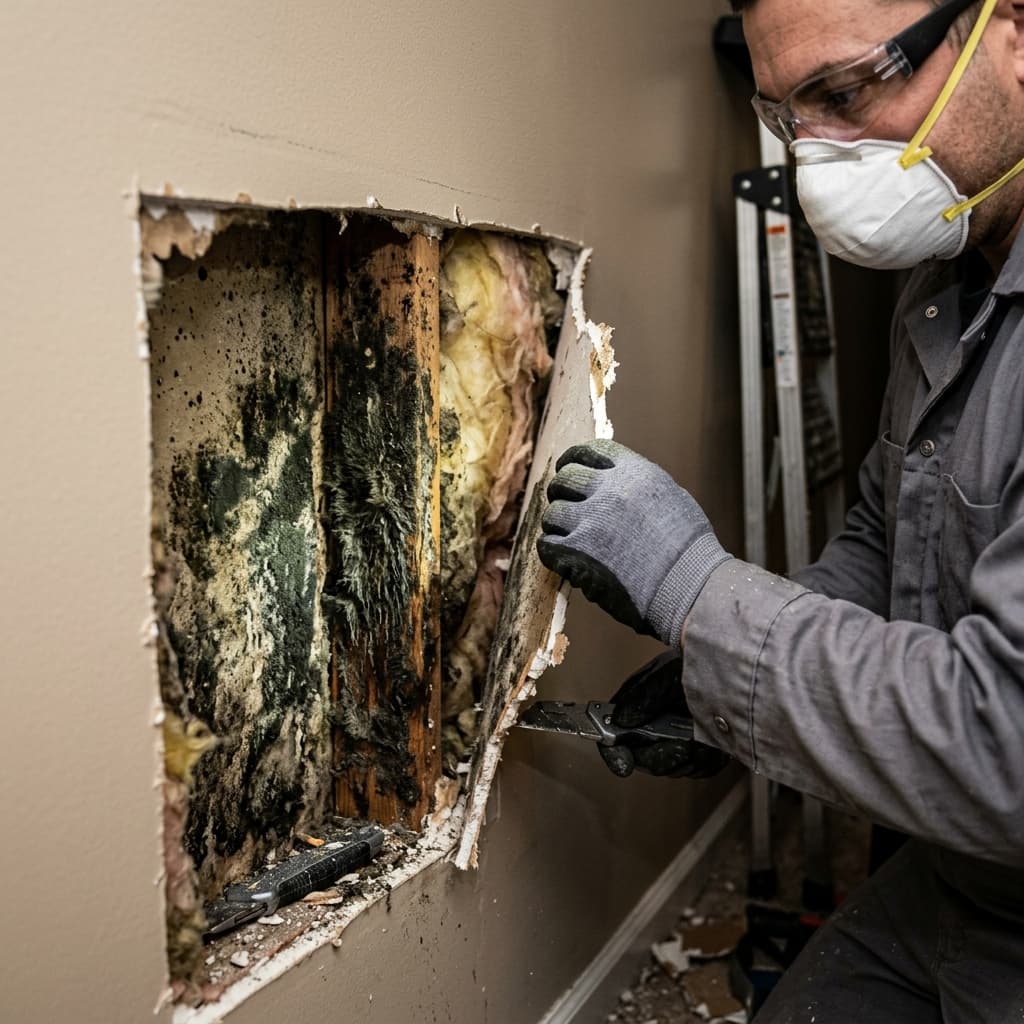
- Can you walk me through your remediation protocol? A trained technician should be able to explain containment, HEPA filtration, antimicrobial treatment, and clearance testing without hesitating. Vague answers are a red flag.
Red flags to walk away from
- Pressure to sign an "assignment of benefits" immediately. AOB documents transfer your insurance rights to the contractor and have been the subject of fraud cases in several states. Read carefully before signing anything that gives a contractor authority to negotiate with your insurer on your behalf.
- Cash-only pricing with no written estimate. Restoration is not a corner-store transaction. Every scope item should be written, priced, and signed.
- Promises of "free roof replacement" or "we'll waive your deductible." Waiving an insurance deductible is illegal in most jurisdictions and a warning sign of insurance fraud.
- No moisture meter, no thermal camera, no documentation in their truck. If a crew shows up with shop-vacs and box fans and no measurement equipment, they are not doing standards-based restoration.
Before signing the contract
Ask for a written scope of work, the daily and weekly rates for equipment (air movers and dehumidifiers), an itemized list of any demolition the team plans to perform, and the company's process for clearance — how they will prove the affected area is dry before reconstruction begins. A reputable restoration company will hand you all of this without complaint, because they know it makes the insurance claim cleaner and the relationship with the homeowner clearer.