
Black Mold vs. Mildew: Key Differences Homeowners Should Know
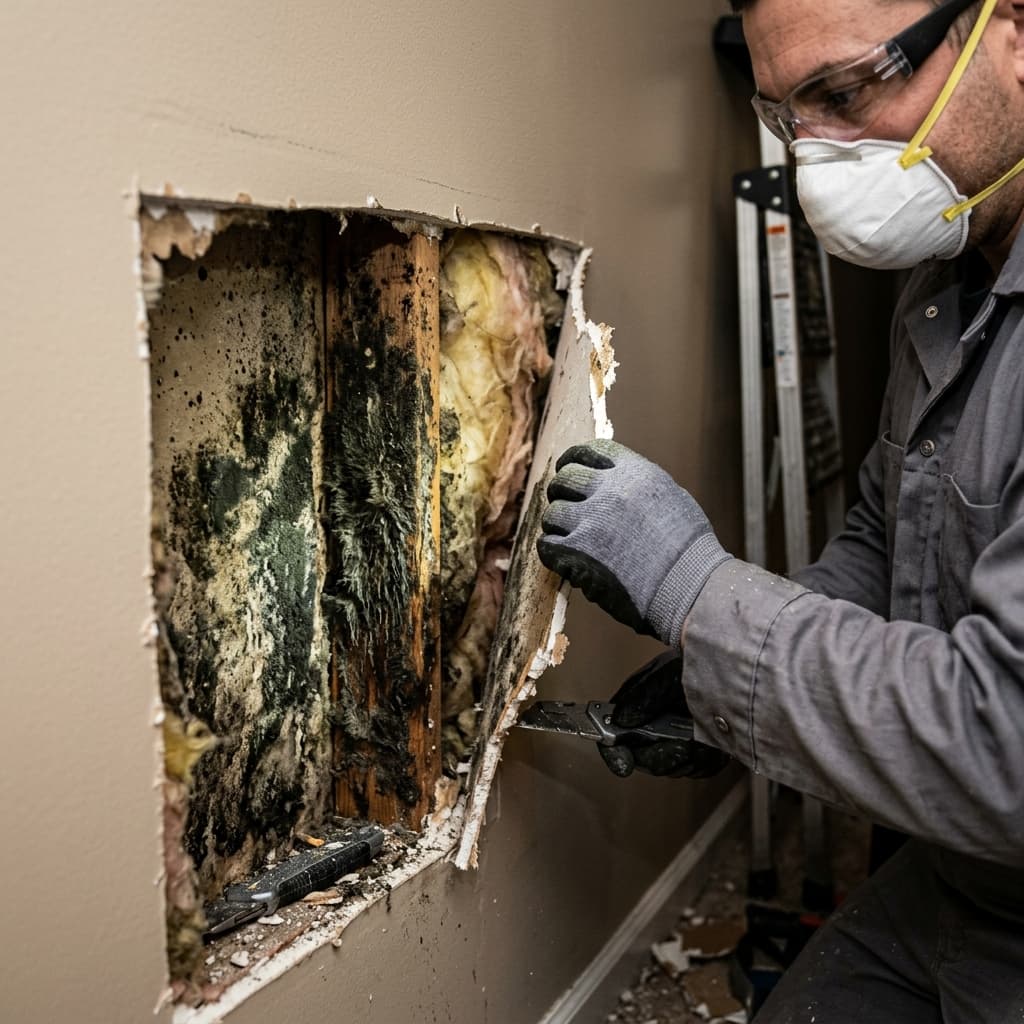
It is common to find dark patches or discoloration in damp areas like bathrooms, crawl spaces, and laundry rooms. Property owners often use the terms "mold" and "mildew" interchangeably, but they can behave differently on building materials. Knowing the difference helps you decide whether a surface cleaning attempt is reasonable or whether professional mold remediation should be reviewed.
What is Mildew?
Mildew is a superficial, surface-level fungus that grows in damp, warm spaces. It typically appears as a flat, powdery, or fluffy layer and is usually white, gray, or light yellow. Mildew grows strictly on the surface of materials, meaning it does not dig deep structural roots. You will typically find it on bathroom tile grout, shower curtains, or damp fabrics.
What is Mold?
Mold can penetrate below the surface of porous materials. It may appear fuzzy, slimy, or elevated and can display dark colors like black, dark green, brown, or deep purple. Mold can affect organic materials such as drywall paper or wood framing. Some species and conditions may create health concerns, so color alone should not be used as a diagnosis.
Comparison Table
| Feature | Mildew | Mold |
|---|---|---|
| Appearance | Flat, powdery, white/gray/yellow | Elevated, fuzzy/slimy, black/dark green/brown |
| Penetration | Superficial surface growth | Deep roots into drywall and timber |
| Damage | Cosmetic staining, easily wiped | Decomposes wood and drywall framing |
| Health Risk | Mild respiratory or eye irritation | Potential allergy, asthma, or occupant health concerns |
How to Treat Mildew vs. Mold
Because mildew is superficial, you can typically scrub it off bathroom tiles using standard household cleaning spray or vinegar and a stiff brush. Ensure you wear gloves and keep the room ventilated.
Mold in porous materials such as drywall or ceiling tiles often cannot be solved by surface scrubbing alone. Disturbing affected materials can spread spores. Drywall affected by mold may need removal and disposal, while framing should be reviewed under a containment and remediation plan.