
Crawl Space Encapsulation: A Homeowner's Guide to Reducing Mold & Rot Risk
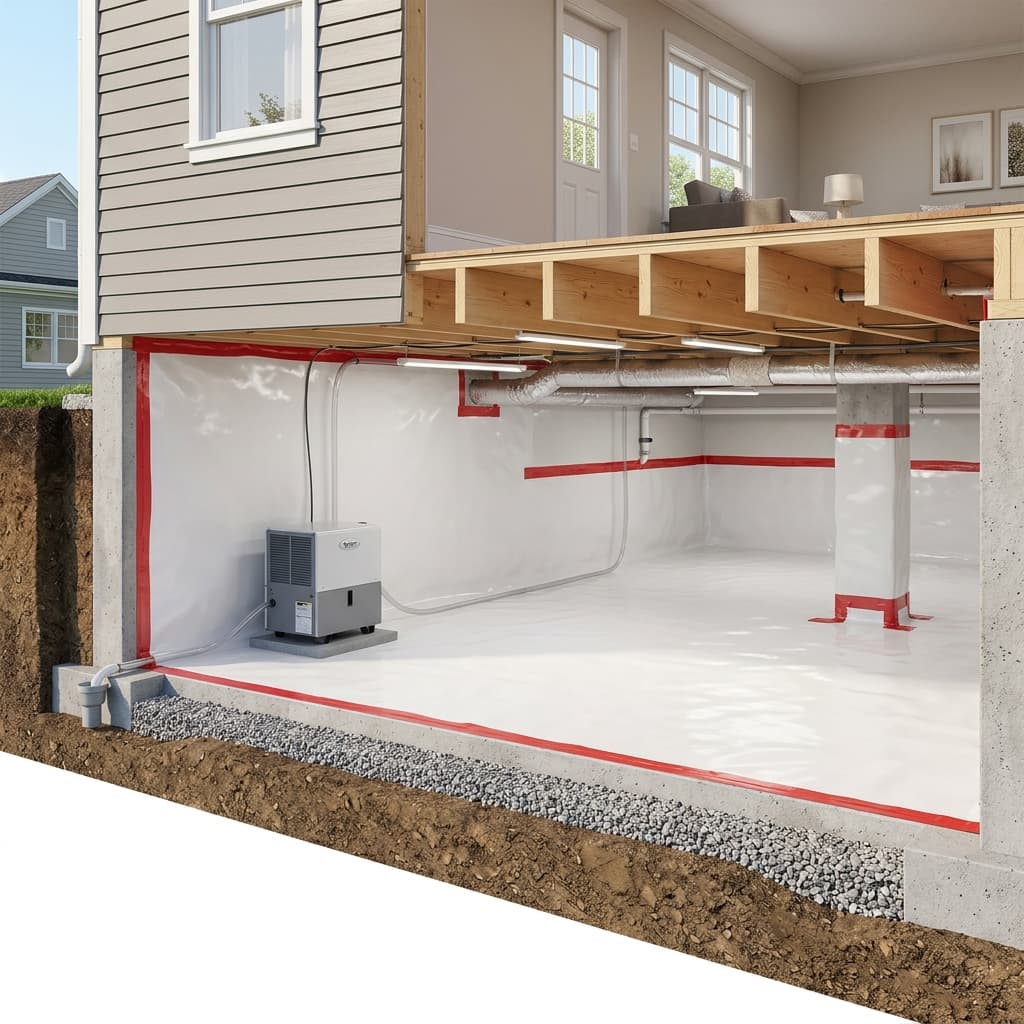
Many homes in Northern Virginia, Maryland, and Washington DC are constructed over a crawl space foundation. Historically, building codes required these spaces to be vented to the outdoors. In hot, humid Mid-Atlantic summers, open crawl space vents can draw damp outdoor air under the home, where it may condense on cooler wood joists and subfloors and contribute to wood rot, floor movement, musty odors, and mold-friendly conditions.
The Science of the Stack Effect
Your home behaves like a chimney. This is called the Stack Effect. Hot air rises and exits through roof and attic vents, creating a negative pressure zone in the lower parts of the home. That pressure can draw air upward from the crawl space into finished living areas. If the crawl space is damp or musty, reducing crawl-space moisture can help support better indoor air conditions.
What is Crawl Space Encapsulation?
Crawl space encapsulation is the process of reducing crawl space exposure to ground moisture and outdoor humidity, turning it into a more controlled space. The encapsulation process typically includes:
- Debris Removal & Grading: Clearing out old insulation, debris, and leveling the crawl space ground.
- Vapor Barrier Installation: Covering the dirt floor and foundation walls with a heavy-duty, multi-layer 12-mil to 20-mil plastic vapor barrier. All seams are taped and sealed.
- Sealing Outdoor Vents: Air-sealing the perimeter foundation vents to prevent outdoor humidity from entering.
- Active Dehumidification: Installing a low-clearance crawl space dehumidifier to help maintain relative humidity near target levels and reduce mold-friendly conditions.
Key Benefits of Encapsulation
- Mold Risk Reduction: Keeping relative humidity near target levels can reduce mold-friendly conditions around structural joists.
- Indoor Air Quality Support: Reducing crawl-space moisture can help limit musty odors and airborne contaminants moving into living areas.
- Utility Bill Support: A drier, insulated crawl space can reduce HVAC strain, with savings depending on the home and system.
- Hardwood Flooring Support: Reducing ground moisture can help lower the risk of first-floor hardwood movement.