
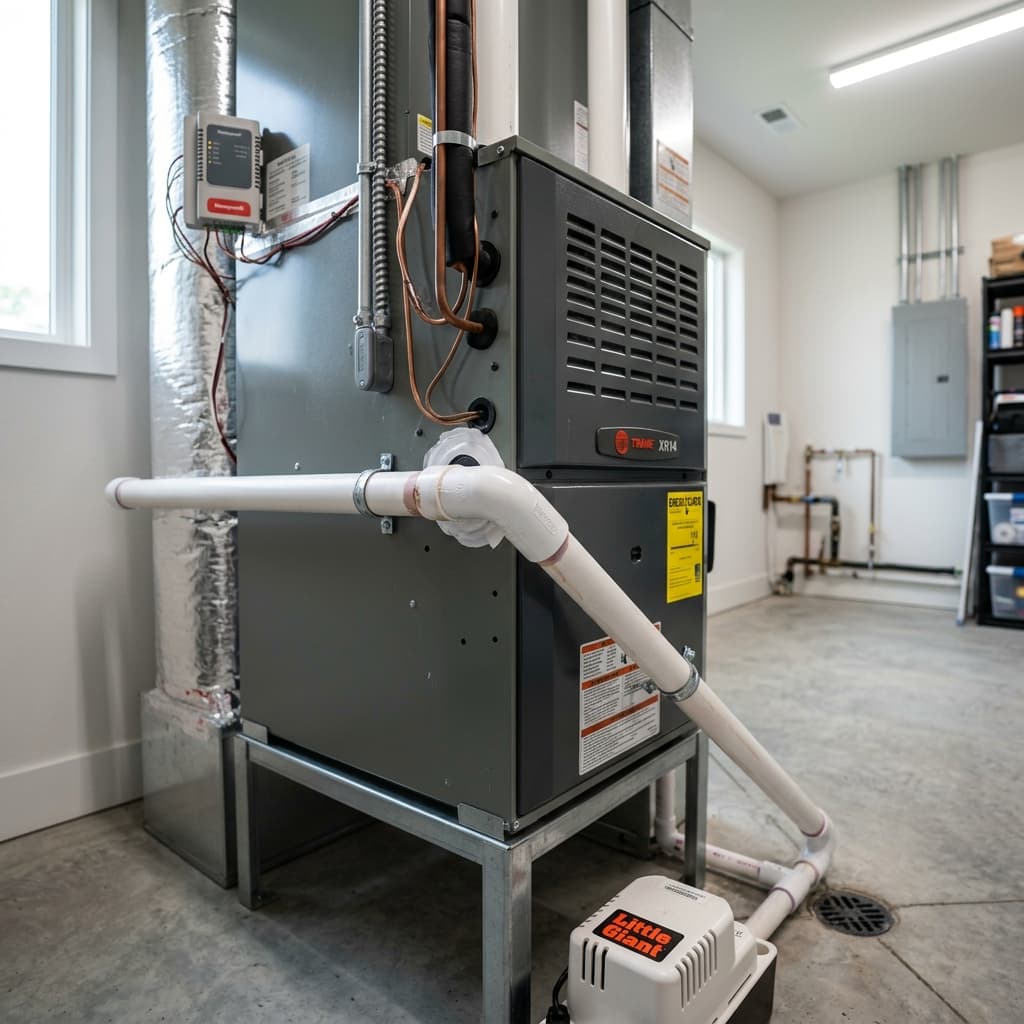
How AC Condensate Lines Work
Air conditioners cool your home by drawing warm, humid air over chilled evaporator coils. As the air cools, moisture condenses on the coils—much like glass condensation on a hot day—and drops into a condensate pan. From there, the water drains out of your home through a white PVC condensate pipe, either routed to a floor drain, a sump pump, or cleanly outdoors.
Why Condensate Lines Clog and Leak
Because the condensate line is dark and constantly damp, it creates a perfect environment for algae, mold, mildew, and bacterial slime to grow. Over time, this biological buildup forms a thick clog inside the narrow PVC pipe. When water cannot flow through the line, the condensate pan overflows. If the unit is in the attic, water leaks onto the ceiling below. If it is in a closet or basement, it can soak nearby drywall, flooring, and carpet.
Vetting and Cleaning the System
Preventative maintenance is the best defense against summer HVAC leaks. Homeowners should inspect the drain pan and PVC lines monthly during the cooling season. Installing a simple float switch (or safety switch) on the condensate line is highly recommended. This device automatically shuts down the AC system if the water level rises in the pan, preventing an active overflow and saving you from thousands of dollars in water damage repairs.
Related Guides
Need help with property damage?
Prime Solutions LLC reviews active water, fire, mold, and cleanup requests across Northern Virginia, DC, and Maryland.
+1 (571) 655-7207