
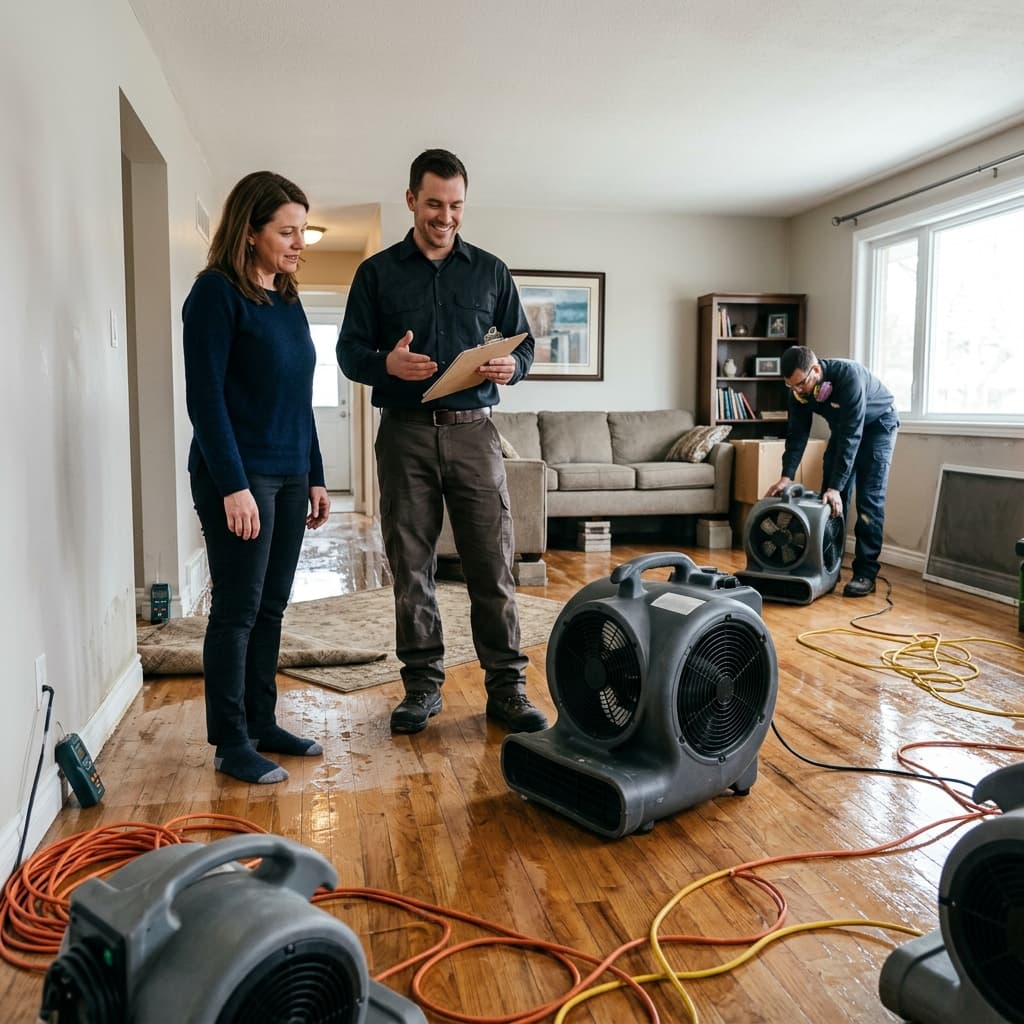
What drives water damage restoration cost
Three factors move the price more than anything else: the category of water (clean Cat 1 from a supply line is the cheapest; Cat 2 gray water and Cat 3 sewage cost more because they require disposal and sanitation), the square footage and types of materials affected (carpet and pad vs. hardwood vs. drywall vs. insulation), and the time the water has been sitting. A loss that has been wet for several days usually requires more demolition and longer drying because moisture has migrated into framing, baseboards, and adjacent rooms.
Typical ranges in the DMV
Small, single-room Cat 1 water losses with quick extraction and drying sit on the lower end. Multi-room losses, finished basements with carpet and pad, or any loss involving sewage or sustained moisture sit higher because they require more equipment days, demolition, and sanitation. Moisture mapping, antimicrobial treatment, and documentation add to the scope and can support carrier review. Reconstruction — drywall, flooring, paint, and trim — is billed separately from the initial mitigation and depends on the materials and finishes being restored.
How insurance affects out-of-pocket cost
A sudden, accidental water loss may be eligible for homeowners insurance review, depending on policy terms. The homeowner may have a deductible, and the carrier reviews the repair scope. Gradual leaks, long-term moisture, and surface flooding are evaluated under your policy and any separate flood coverage. Working with a restoration company that documents scope, moisture readings, and timeline carefully can help the carrier review the claim. Always confirm coverage with your carrier before assuming an out-of-pocket number, and keep all photos, receipts, and contact records.
Related Guides
Need help with property damage?
Prime Solutions LLC reviews active water, fire, mold, and cleanup requests across Northern Virginia, DC, and Maryland.
+1 (571) 655-7207