
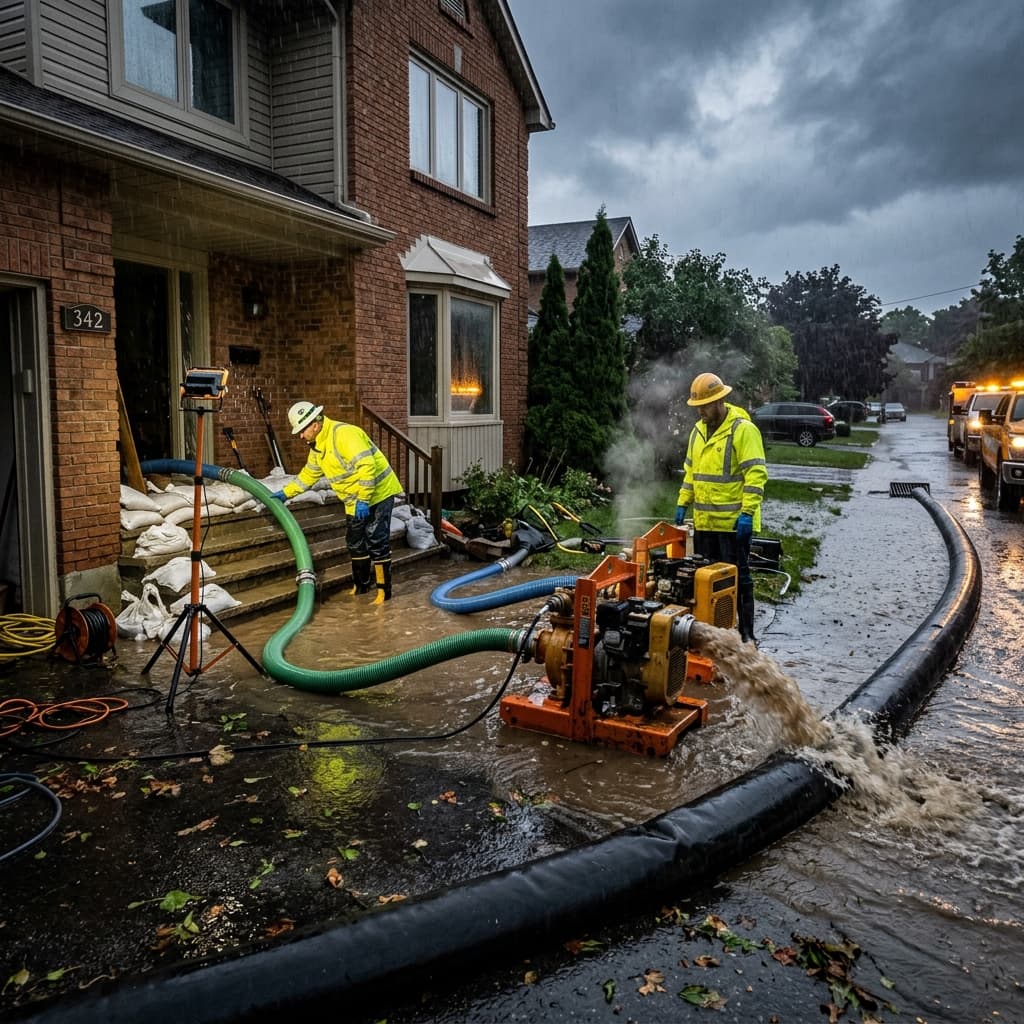
Sump pump and storm water failures
Heavy storms can overwhelm sump systems, especially when the pump loses power, the float switch fails, the discharge line clogs, or exterior drainage sends water back toward the foundation. Finished basements with carpet, drywall, insulation, and stored contents can absorb water quickly, so extraction and documentation should begin as soon as the area is safe.
Burst pipes and appliance leaks
Basement utility rooms often contain water heaters, washing machines, supply lines, pressure tanks, and plumbing runs. A broken line can release water into finished areas, under flooring, and behind walls before the source is found. Shut off the main water valve when safe and document the source before materials are moved.
Sewage backups and contaminated water
Floor drains, sewer lines, and drain backups can push contaminated water into a basement. These events are different from clean-water leaks because porous materials may need removal and disposal. Keep people away from the area, avoid running HVAC if odor or contamination is spreading, and preserve photos from a safe distance.
Foundation seepage and hidden moisture
Foundation cracks, window wells, exterior grading, clogged gutters, and hydrostatic pressure can move water into a basement slowly or during storms. Even if the visible water is minor, hidden moisture behind baseboards and under flooring can create repair problems later. Moisture checks help decide whether cleanup is enough or whether repair planning is needed.
Related Guides
Need help with property damage?
Prime Solutions LLC reviews active water, fire, mold, and cleanup requests across Northern Virginia, DC, and Maryland.
+1 (571) 655-7207