
Why basements flood in Northern Virginia
DMV basements take more water damage calls than any other source for five common reasons. Sump pump failure (power loss, switch stuck, overwhelmed by storm volume) is the leading cause in finished basements. Burst supply lines and water heater failures can discharge large amounts of water. Foundation seepage and hydrostatic pressure push groundwater through cracks after heavy rain or snowmelt. Sewer or storm-drain backup pushes contaminated water up through basement floor drains. Foundation cracks, failed window wells, and clogged exterior drainage allow surface water inward. Each cause has a different cleanup classification and different insurance treatment.
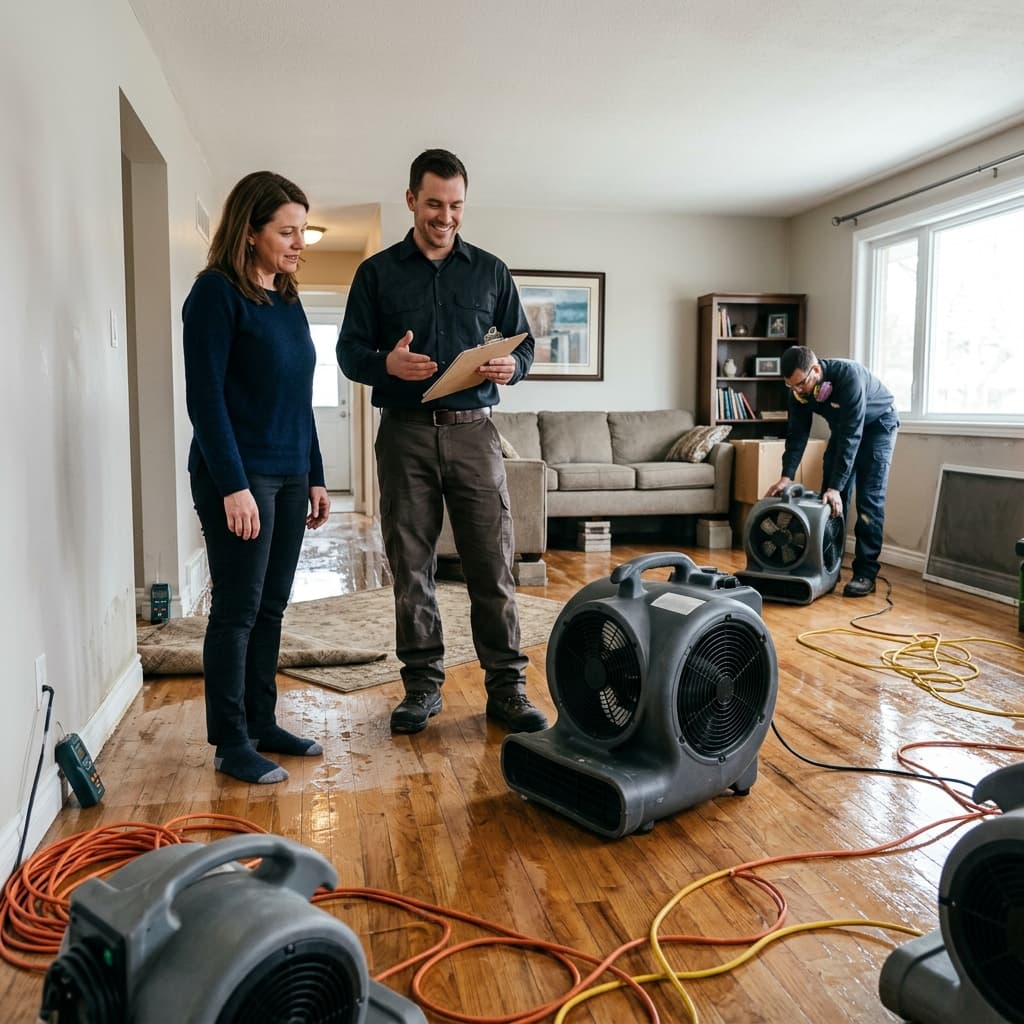
The first 48 hours: extraction and drying sequence
Step one is stopping the source when safe: shut off power to the basement at the breaker if water is near outlets, and shut off the main supply if the source is plumbing. Step two is bulk extraction with appropriate equipment. Step three is moisture mapping with meters and thermal imaging when useful to find hidden water behind drywall, under carpet pad, in wall cavities, and along baseboards. Step four is structural drying with air movers and dehumidifiers, with moisture readings until the basement reaches documented dry-standard targets. Wet wall cavities can develop mold-friendly conditions quickly, so prompt action matters.
Restoration cost by scope
Working price ranges for basement water damage in Northern Virginia. Minor unfinished basement (clean water, small area, no structural soak): $500-$2,000. Moderate unfinished basement (larger area, drying of walls and slab, no demo): $2,000-$5,000. Finished basement with carpet and drywall (Category 1 clean water, padding replacement, partial drywall): $4,000-$10,000. Finished basement with extensive Category 2 water (gray water from supply line, full drywall removal to 2 feet, padding replacement, sanitization): $8,000-$18,000. Category 3 sewage backup or long-term flooding (full demo of porous materials, antimicrobial treatment, biohazard cleanup): $12,000-$30,000+.
What insurance does and does not cover
Homeowners policies often review sudden water losses inside the home — burst pipes, supply-line failures, water heater leaks, accidental appliance overflow — differently from long-term seepage, maintenance issues, or surface flooding. Sewer or drain backup may require a separate endorsement, and surface flooding is generally reviewed under separate flood coverage. The key for claim review is documenting the trigger event, timeline, and observed conditions quickly.
Preventing repeat basement flooding
After the first incident, most homeowners want to make sure it does not happen again. Three high-leverage fixes: install a battery-backup sump pump that runs during power outages (when the worst storms hit), inspect and maintain exterior drainage (downspout extensions, regrading away from foundation, clear window wells), and consider interior perimeter drainage and a sealed sump system for chronic seepage issues. For finished basements, also raise critical items (electronics, irreplaceables) off the floor and install water-leak sensors at the water heater, washing machine, and sump pit that alert your phone before a small drip becomes a flood.
Related Guides
Need help with property damage?
Prime Solutions LLC reviews active water, fire, mold, and cleanup requests across Northern Virginia, DC, and Maryland.
+1 (571) 655-7207