
Why padding matters more than carpet
Carpet itself is mostly synthetic fiber and may tolerate some water losses when extraction and documentation happen early. The padding underneath — typically open-cell foam or rebond — absorbs water quickly and is often the limiting factor in carpet recovery decisions. Saturated padding can hold moisture beneath the carpet and may need removal depending on water category, duration, saturation level, material age, and whether the carpet itself remains viable.
The three water categories and what they mean for carpet
ANSI/IICRC S500 classifies water losses into three categories that guide carpet treatment. Category 1 (clean water from supply lines, water heaters, ice maker leaks): carpet may be evaluated for drying when extraction begins early, padding is addressed, and the structure dries to target readings. Category 2 (gray water from washing machine discharge, dishwasher overflow, toilet overflow without sewage): carpet decisions depend on contamination, material condition, and cleaning feasibility. Category 3 (sewage, river/storm flooding, or heavily contaminated standing water): carpet and padding are commonly removed because contamination and exposure conditions create higher health and material risks.
The restoration sequence for salvageable carpet
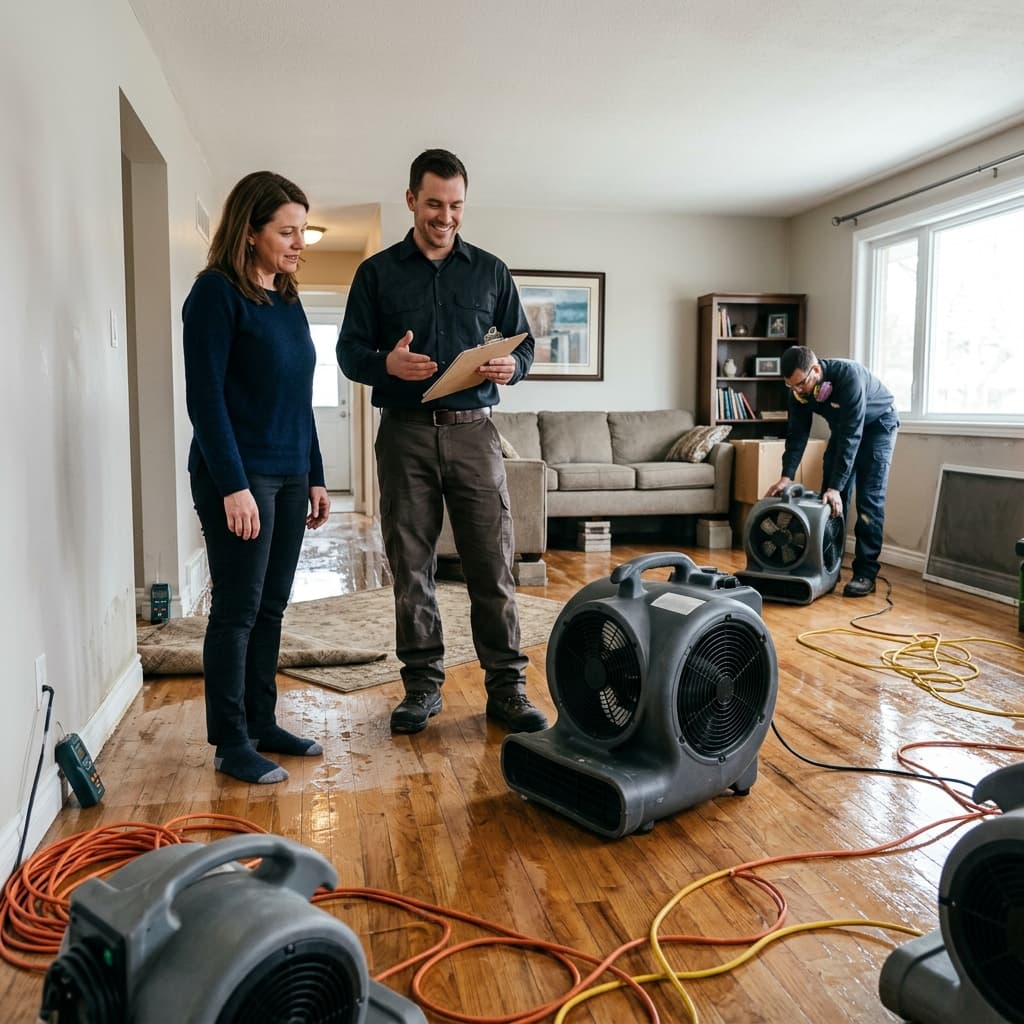
When carpet can be saved, the usual sequence is: extract bulk water with weighted hard-surface or carpet wand extractors, lift the carpet from the tack strip along the wettest edge, remove and dispose of wet padding when it is not viable, suspend the carpet on blocks to allow airflow underneath, deploy air movers across the carpet surface and underneath, run LGR dehumidifiers in the space to manage moisture, monitor moisture readings on subfloor and carpet daily, replace the padding once subfloor readings support reinstall, re-stretch carpet onto the tack strip, and apply antimicrobial treatment when appropriate.
Signs your carpet was not properly dried
If carpet was reinstalled before the subfloor dried properly, problems may show up later. Watch for musty odor that returns after vacuuming, dark stains bleeding through from the subfloor, visible growth at carpet edges or near baseboards, occupant comfort concerns, or a damp feel when you press fingers into the carpet on a humid day. These signs can indicate that additional moisture review, carpet/padding replacement, or subfloor remediation may be needed.
When replacement is the right call from day one
Skip the dry-in-place process and replace carpet when: the water source was Category 2 or 3, the carpet was older than 8-10 years and would need replacement soon anyway, the affected area covers more than half the room (re-stretching becomes difficult), the carpet has wicking stains that already extend up the fiber from the padding, or the homeowner cannot tolerate 3-5 days of equipment running in the space. Insurance usually covers replacement when proper documentation shows why drying in place was not viable — moisture readings, photos of saturation, and a written scope from the restoration company are what adjusters look for.
Related Guides
Need help with property damage?
Prime Solutions LLC reviews active water, fire, mold, and cleanup requests across Northern Virginia, DC, and Maryland.
+1 (571) 655-7207