
The Vulnerability of Outdoor Decks to Moisture
Outdoor wooden decks are vulnerable to moisture because they are exposed to rainfall, snow accumulation, and shifting relative humidity. When water pools on horizontal surfaces or gets trapped between deck boards and joists, it can contribute to fungi, mold, and wood-destroying rot. If not addressed, water can degrade wood fibers and create structural concerns.
Early Warning Signs of Deck Water Damage
To reduce the risk of costly structural replacements, homeowners should look out for early warning signs of deck water damage. These include wood rot, loose or backing-out nails and screws, rust or corrosion on metal joist hangers and fasteners, musty odors, and dark staining or algae growth that can affect traction. Check particularly around the ledger board, which connects the deck to your house, because it is an important structural junction.
Preventative Maintenance to Protect Your Deck
Preventative maintenance is the key to expanding your deck's lifespan. We recommend sweeping away leaves, pine needles, and dirt from between deck boards, as these trap water against the wood. Ensure that your deck has a functioning ledger flashing — a metal or plastic cap that diverts water away from the house wall. Finally, clean and apply a high-quality semi-transparent sealer or stain every two to three years to create a protective hydrophobic barrier that repels water.
The Deck Restoration Process
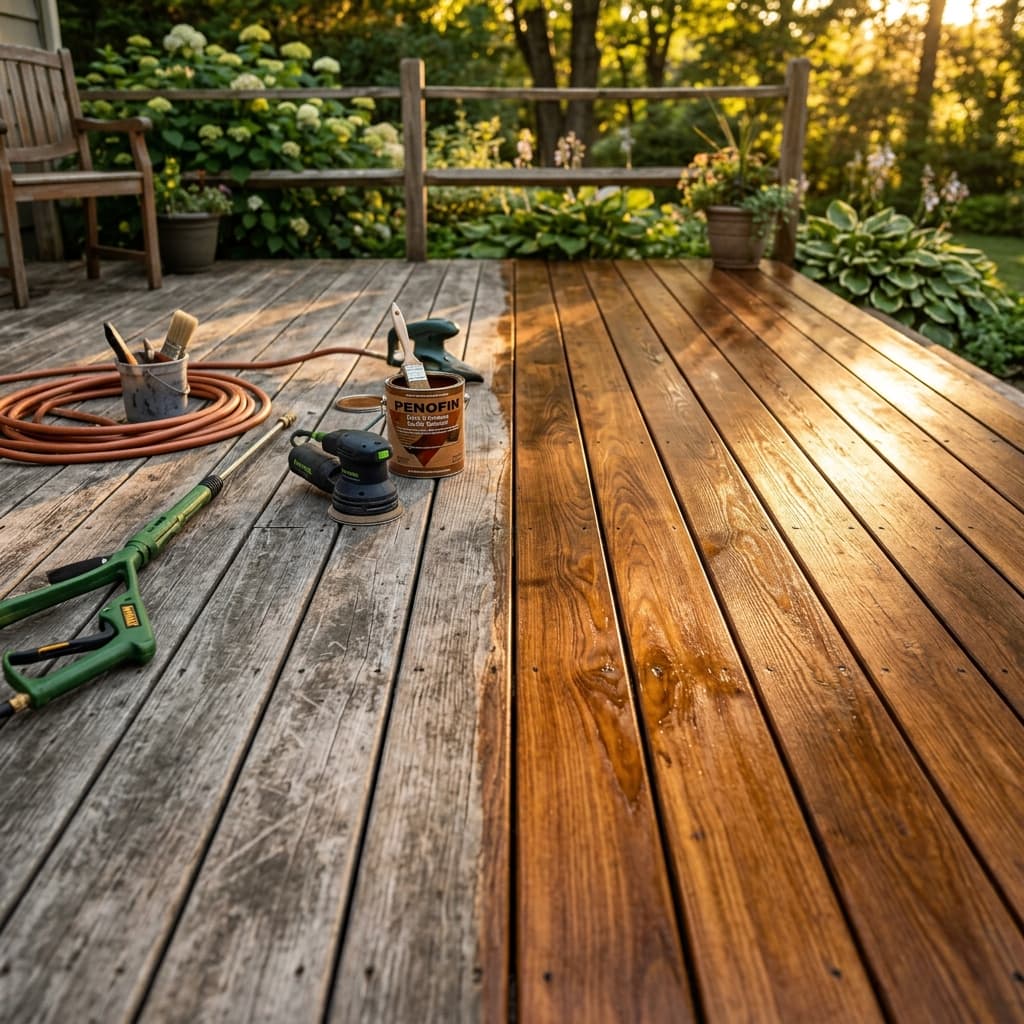
If your deck already has water damage, a professional restoration process should start with condition review and repair planning. First, soft-wash the deck to remove dirt, algae, and mold without damaging wood fibers (avoid high-pressure power washers, which split wood). Next, sand the surfaces after they are dry enough for finishing work. For minor rot, scrape away soft wood and treat it with professional wood consolidators or hardeners. For structural elements like rotted joists, ledger boards, or posts, cut out and replace the compromised timber with pressure-treated lumber. Finally, apply a UV-resistant sealer to help protect the restored wood.
Related Guides
Need help with property damage?
Prime Solutions LLC reviews active water, fire, mold, and cleanup requests across Northern Virginia, DC, and Maryland.
+1 (571) 655-7207