
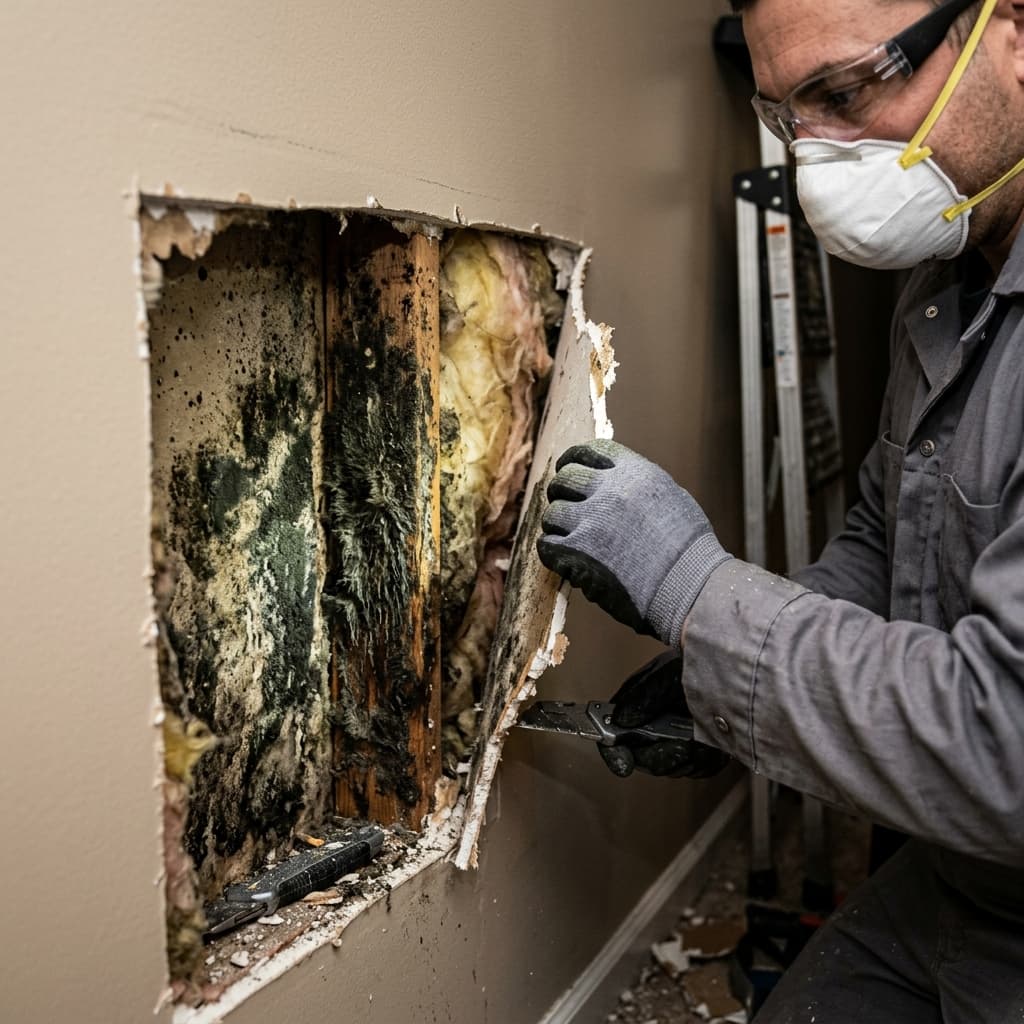
The 24 to 48 hour window matters
After a leak, flood, or overflow, moisture trapped in drywall, carpet pad, insulation, cabinets, and wood framing can create conditions where mold-like growth may begin within a short window. The exact timing depends on temperature, humidity, airflow, material type, and how much water migrated into hidden cavities. In Northern Virginia, humid weather can make wet rooms stay damp longer, especially in finished basements, bathrooms, crawl spaces, and rooms with limited ventilation.
Dry what you cannot see
Visible water is only the first problem. Water often moves under baseboards, below flooring, into wall cavities, and through ceilings before the surface looks dry. Restoration teams use moisture meters, thermal review, air movement, and dehumidification to verify whether materials are returning to a dry standard. Drying only the surface can leave damp insulation, subfloor, or drywall paper behind new repairs.
Document before cleanup changes the scene
Before materials are removed, take photos of the source, affected rooms, visible water lines, flooring, drywall, cabinets, and contents if it is safe. Keep notes on when the water was discovered, when the source was stopped, and when drying started. This helps the homeowner, restoration team, and adjuster understand the timeline and whether mold prevention, remediation, or repair planning is needed.
When to request professional mold review
Call for a mold-focused review if the area stayed wet for more than a day or two, if musty odor appears, if visible growth develops, if water reached porous materials, or if the leak was hidden behind cabinets, walls, or flooring. The safer repair path is to confirm moisture conditions before closing walls, installing flooring, or repainting.
Related Guides
Need help with property damage?
Prime Solutions LLC reviews active water, fire, mold, and cleanup requests across Northern Virginia, DC, and Maryland.
+1 (571) 655-7207