Mitigation is the stabilization phase
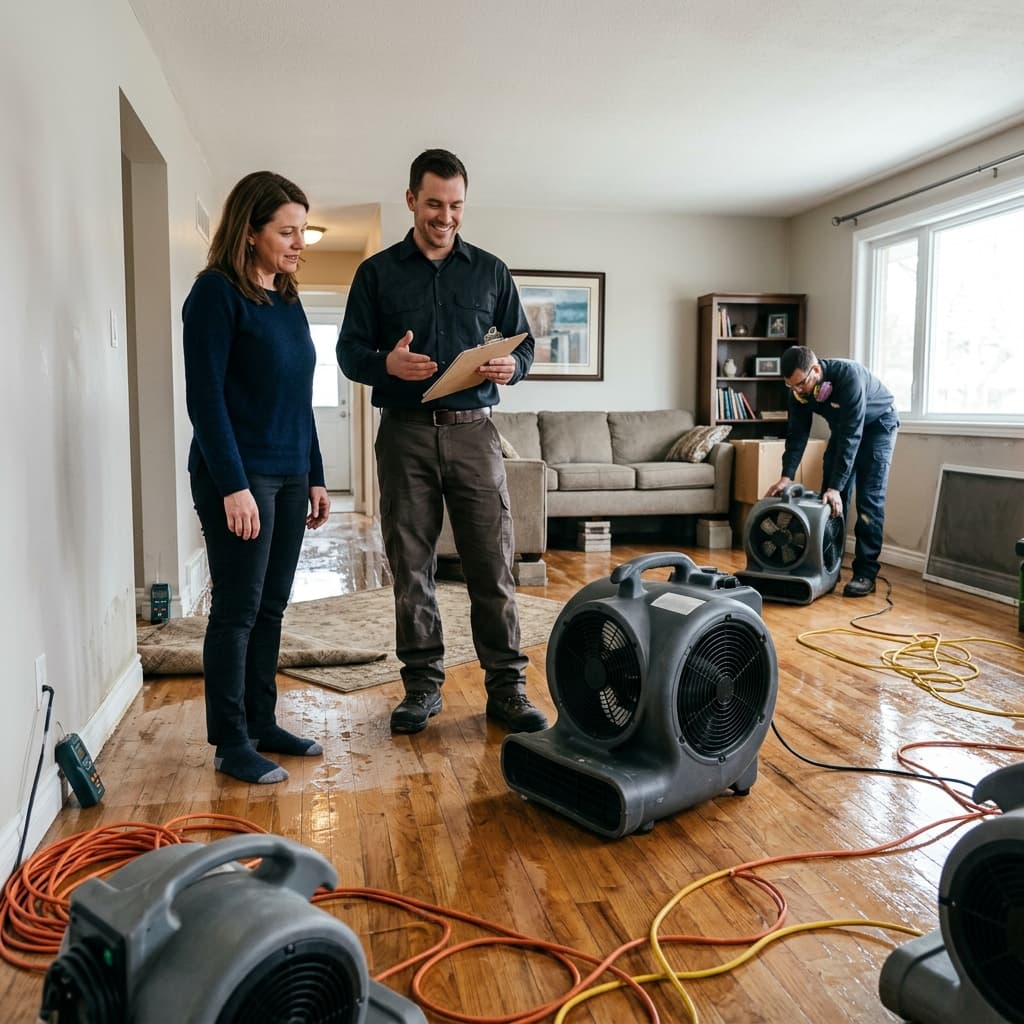
Water mitigation focuses on stopping additional damage. That can include source control, extraction, moisture mapping, selective removal of materials that cannot be restored, drying equipment, dehumidification, and daily moisture checks. The goal is to stabilize the property and create a clear record of what was wet before repair decisions are made.
Restoration includes cleanup, repair, and return to use
Water restoration is the broader recovery process. It may include mitigation, cleanup, drying verification, drywall repair, flooring replacement, trim, paint, cabinet repair, contents review, and final closeout. Some losses only need mitigation and drying. Larger losses need restoration and reconstruction after stabilization and repair planning.
Why homeowners should separate the scopes
Separating mitigation from restoration keeps the project easier to document. The mitigation record explains why materials were removed and when the structure reached drying targets. The restoration scope explains what must be repaired or replaced. That distinction helps homeowners compare estimates, talk with adjusters, and avoid rebuilding before the property is ready.
Common handoff points after drying
The handoff from mitigation to restoration usually happens when moisture readings, demolition notes, photos, and affected-room details are ready for repair planning. Typical next steps include drywall replacement, flooring decisions, cabinet review, trim and paint, subfloor checks, and a room-by-room repair estimate.
Related Guides
Need help with property damage?
Prime Solutions LLC reviews active water, fire, mold, and cleanup requests across Northern Virginia, DC, and Maryland.
+1 (571) 655-7207