
How to Prevent AC Condensate Drain Line Clogs: Homeowner Guide
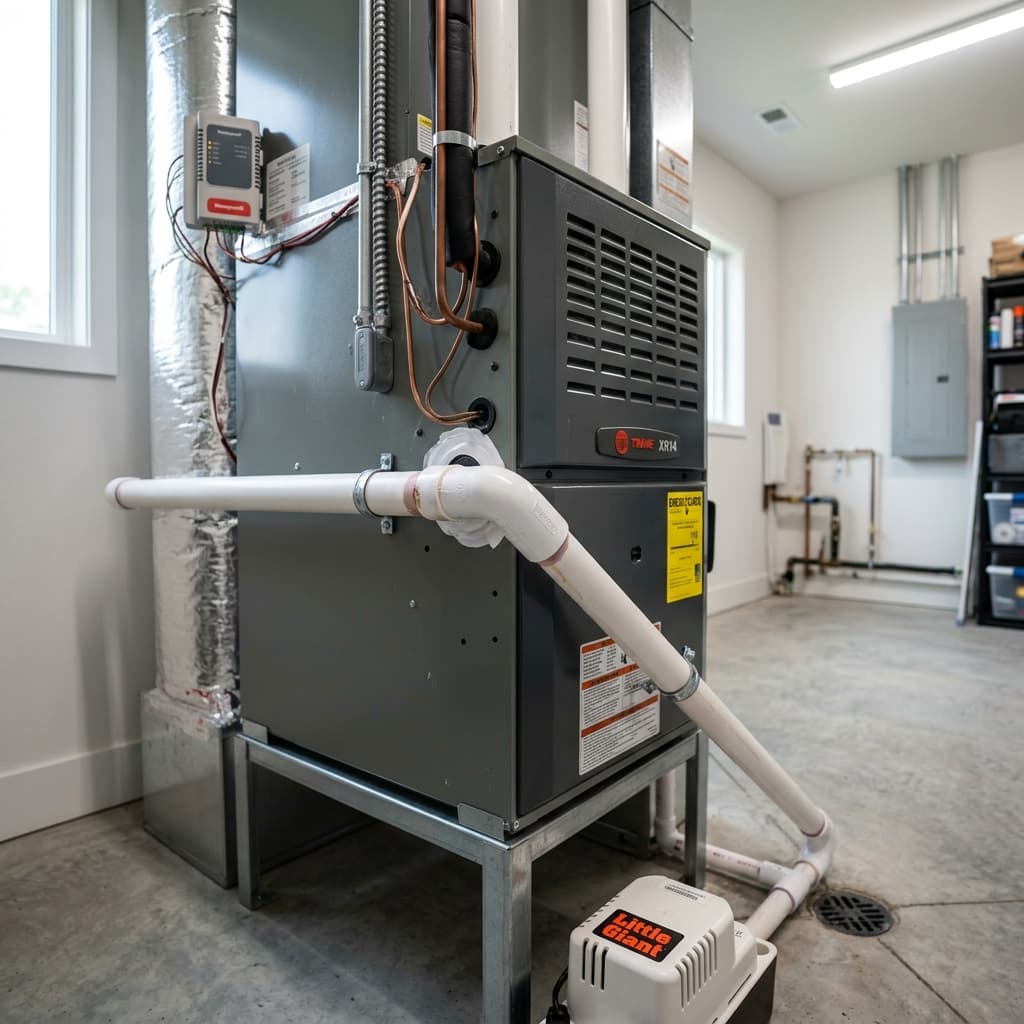
When outdoor temperatures rise during Northern Virginia summers, air conditioning systems work overtime. As the system cools your home, it extracts gallons of water from the air. Under normal conditions, this water exits safely through a PVC condensate drain line. However, mold, algae, and dirt can build up inside the pipe, causing a clog and a sudden indoor water leak. Learning to clear this line can prevent water damage to ceilings, drywall, and flooring.
How an AC Condensate Drain Clog Occurs
The dark, wet interior of an HVAC drain line is a perfect breeding ground for biological growth. Over several months, algae, bacterial slime, and dust combine into a thick jelly-like plug. When the drain is blocked, water backs up into the condensate pan. If your HVAC unit is in the attic, the pan overflows onto ceiling drywall. In basement or utility closet installations, water can seep onto floor systems, carpet, and baseboards, often going unnoticed until mold begins to grow.
Step-by-Step AC Condensate Line Maintenance Checklist
- Turn Off the HVAC System: Safety first. Switch off the thermostat and turn off the breaker for your furnace or air handler. This prevents the unit from running while you work.
- Locate the PVC Drain Line and T-Connector: Look for a white PVC pipe leading away from your indoor evaporator unit. Most systems have a T-shaped connector (or a vertical pipe end) with a removable cap. If the cap is glued shut, do not force it; consult a professional.
- Check the Condensate Pan: Look under your evaporator coil. If the pan contains standing water, the line is already blocked. If the water is close to the top, act quickly to drain it using a hand pump or a wet-dry vacuum before flushing the pipe.
- Flush the Line with Vinegar: Remove the cap from the T-connector. Pour 1 cup of distilled white vinegar into the opening. The acetic acid in vinegar helps kill algae, mold spores, and bacterial slime. Let it sit for 30 minutes, then flush the line with warm water to ensure it drains freely. Repeat this step every 30 to 60 days during the summer.
- Clear Existing Clogs with a Wet-Dry Vacuum: If the line is already clogged, pouring liquid in will only cause another overflow. Instead, go outside to the end of the PVC drain line (usually near your outdoor condenser unit). Attach the hose of a wet-dry vacuum to the PVC pipe, wrap a damp rag around the connection to seal it, and run the vacuum for 1-2 minutes. This should pull the slime plug out of the pipe.
Essential HVAC Safety Upgrades to Prevent Water Damage
While regular cleaning is highly effective, homeowners can install safety upgrades to protect their property from unexpected clogs:
- Condensate Float Switch (Safe-T-Switch): This mechanical float switch is installed directly inside the drain line or overflow pan. If water backs up, the float rises and instantly shuts down the AC system, stopping the creation of more condensate and preventing an overflow.
- Secondary Drain Pan: If your air handler is in the attic or above finished ceilings, ensure it sits inside a metal secondary drain pan with its own dedicated overflow drain line or float switch.
- Condensate Pump: If your HVAC unit is below the home's sewer line or has no gravity drain path, a condensate pump lifts water up and out of the home. Regularly check the pump's tank and float switch to ensure it operates cleanly.